
Why Fall Is Peak Season for Rodents in Minnesota Homes
As Minnesota temperatures drop, mice and other rodents start looking for what every home can offer: warmth, food, and shelter. For homeowners, that makes fall an important time to think about mice and pest control.
At Compass Pest Control, we know how the changing seasons affect rodent control in Minnesota. Understanding why they become more active in the fall—and what you can do to keep them outside—is the first step toward protecting your home.
Why Fall Is Rodent Season in Minnesota
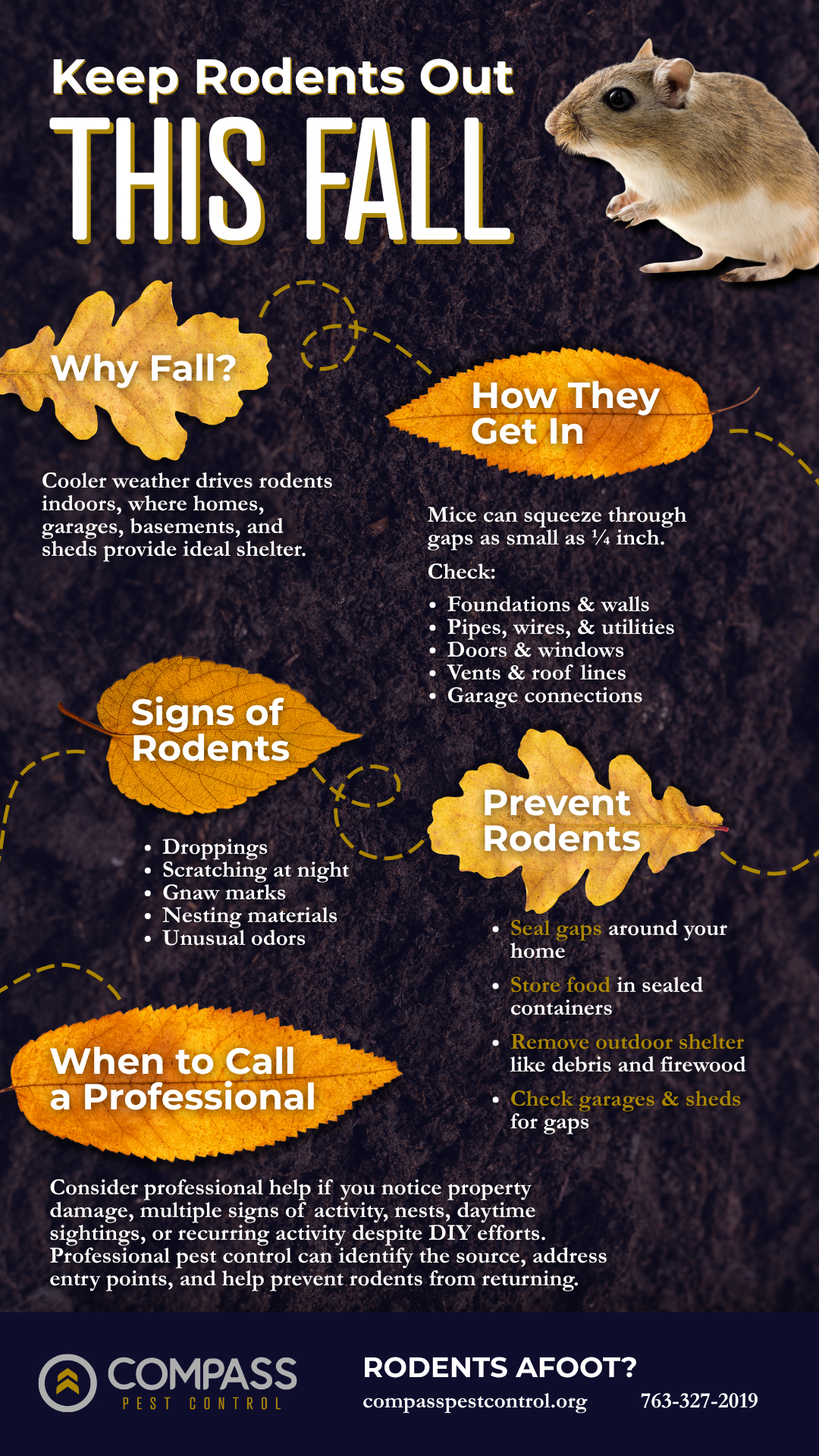
The arrival of cooler weather signals the beginning of fall rodent season, making it an important time for rodent control in Minnesota. As temperatures decline, mice seek protected spaces to escape the cold and consistently access food and water. Your home, garage, basement, or shed provide exactly what they're looking for. Once inside, they establish nests, reproduce, and create ongoing problems if their access points aren't addressed.
How Rodents Get Inside Your Home
One of the biggest challenges with mice and pest control is that rodents don't need a large opening to enter. House mice can squeeze through gaps approximately ¼ inch wide, making even small cracks and openings potential entry points.
Common ways rodents enter Minnesota homes include:
Cracks in foundations and exterior walls
Gaps around pipes, wires, and utility lines
Openings around doors and windows
Damaged vents and roof line areas
Gaps between garages and attached homes
Mice prevention tip: inspect these areas before winter arrives—not after.
Check out our blog, How Pests Get Into Your Home, Part 1: Top Entry Points Pests Use, for more mice prevention tips.
Signs You May Have a Rodent Problem
You don't need to see a mouse to have a mouse problem. Rodents are mostly active at night, so homeowners may notice evidence before spotting the animal itself, including:
Small, dark droppings in cabinets, drawers, or along walls
Scratching or scurrying sounds, especially at night
Gnaw marks on food packaging, wood, or wiring
Shredded paper, insulation, or other nesting materials
Unusual odors in enclosed spaces
For a more detailed look at the warning signs of pest activity, check out another one of our blogs, How Pests Get Into Your Home: Pt 2: Telltale Signs of Pests.
Mice Prevention Tips for Rodent Control in Minnesota
The most effective approach to mice and pest control starts with preventing rodents from entering your home. These mice prevention tips will help reduce the chances of an infestation. Complete them before winter to reduce opportunities for rodents to move indoors.
Seal Potential Entry Points
Inspect your foundation, siding, windows, and utility openings. Use durable materials appropriate for the size and location of each gap, since mice can chew through many common household materials.
Store Food Securely
Keep pantry items, pet food, and birdseed in tightly sealed containers. Clean up spills and crumbs promptly, particularly in kitchens, garages, and storage areas.
Reduce Outdoor Shelter
Keep firewood, debris, and other materials away from your home's exterior. Trim vegetation near the foundation and maintain a clear perimeter where possible.
Check Your Garage and Outbuildings
Make sure doors close properly, inspect weatherstripping, and look for gaps that rodents could use to enter.
Professional Mice and Pest Control During Fall Rodent Season
But what if the rodents are already inside?
If you're wondering how to get rid of mice, the right solution depends on the extent of the problem and how rodents are accessing your home. A single sighting doesn't always indicate a large infestation and might be solved with mouse traps, but recurring activity, droppings, or signs of nesting deserve attention.
Especially because rodents can carry diseases, you should consider professional help if you:
Find chewed wiring, food packaging, or other signs of property damage
Find evidence of rodents in multiple places around your home
Spot mice during the daytime
Repeatedly hear scratching or scurrying at night
Discover nests
Find droppings, especially in the pantry or kitchen
Have been attempting DIY pest control for two weeks and the problem continues
Professional rodent control in Minnesota focuses on identifying the source of the problem, addressing entry points, and determining appropriate control measures. Rather than relying only on short-term solutions, pros take a comprehensive approach to reduce the chance of recurring activity.
At Compass Pest Control, we understand the concerns that come with finding rodents in your home. As a family-owned, local company serving Big Lake and surrounding Minnesota communities, we take a practical, personalized approach to pest management. Our goal is to help you protect your home with solutions built around your property's needs.
Don't wait until winter is in full swing to address a potential rodent problem. Contact Compass Pest Control today to schedule a consultation and learn how our professional mice and pest control services can keep your home protected throughout peak fall rodent season.
