
How Pests Get Into Your Home, Part 1: Top Entry Points Pests Use
Keeping unwanted pests out of your home starts with understanding how they first get inside. Even well-maintained homes have tiny openings that insects and rodents use as easy access points. A proactive pest control strategy focuses on identifying these vulnerabilities before they become an infestation.
Why Pests Migrate Inside
For Minnesota homeowners, seasonal weather plays a major role in pest activity. As temperatures cool in the fall, pests such as mice, Asian lady beetles, and boxelder bugs begin searching for warm places to overwinter. In the spring and summer, ants, spiders, and other insects take advantage of moisture and structural gaps to find food and shelter indoors. When it comes to effective home pest prevention, knowing the most common pest entry points in homes is the first step.
Doors and Windows
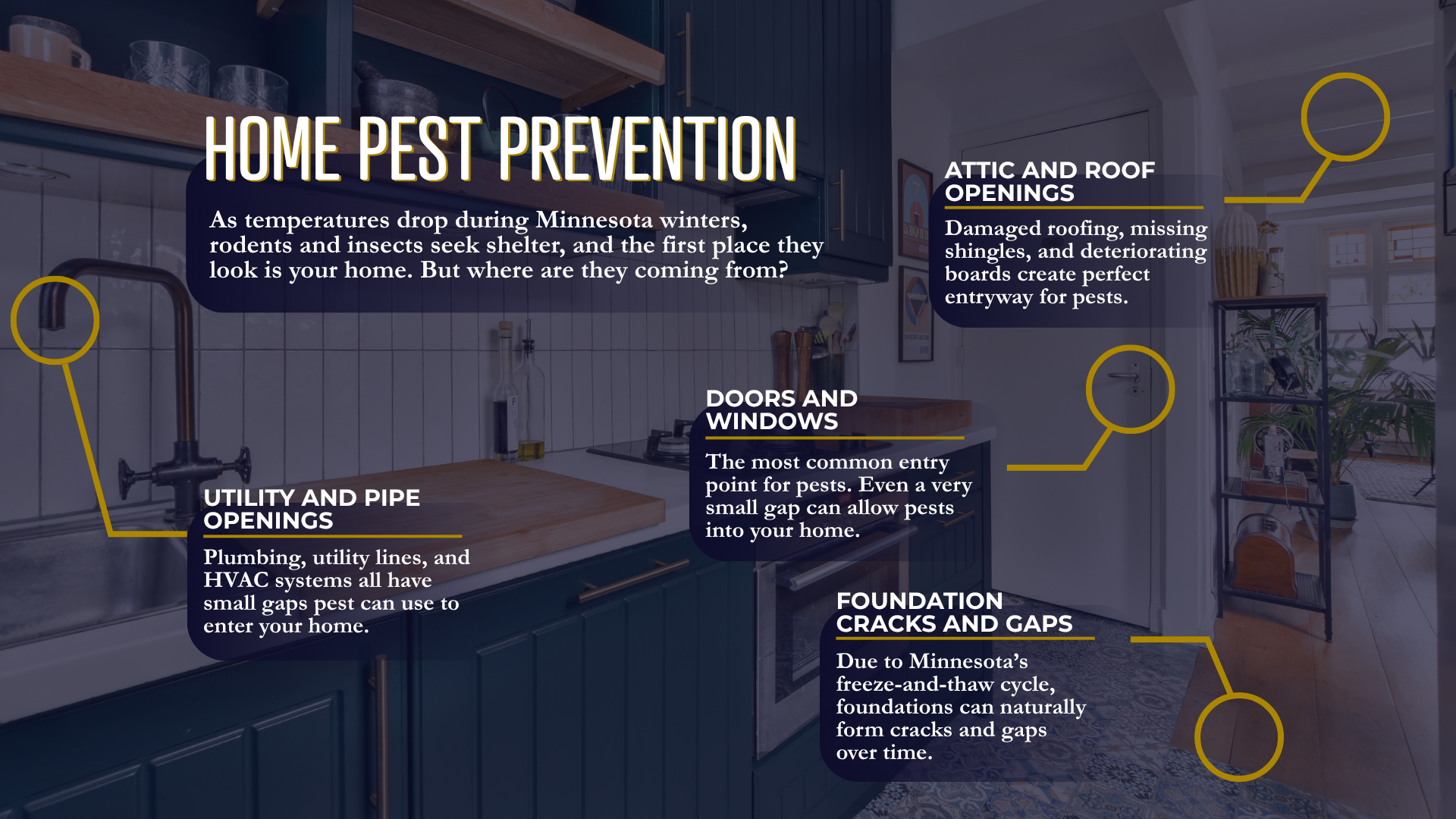
Doors and windows are among the most common pest entry points in homes. Over time, weatherstripping wears out, door sweeps become damaged, and window screens develop tears that allow insects to enter. Even a small gap around a door frame can provide enough space for pests to sneak inside.
Home Pest Prevention: Doors and Windows
Replace worn weatherstripping and damaged door sweeps
Repair or replace torn window screens
Seal gaps around window and door frames with high-quality exterior caulk
Keep exterior doors closed whenever possible
Foundation Cracks and Gaps
Small cracks in your home's foundation or siding can become highways for insects and even rodents. Minnesota's freeze-thaw cycles naturally cause concrete and foundations to expand and contract, creating new openings over time.
When inspecting your home, look for:
Cracks in concrete foundations
Gaps where siding meets the foundation
Separation around expansion joints
Openings around crawl spaces
Since mice can squeeze through openings as small as ¼ inch, identifying rodent entry points before winter arrives is especially important. Seal these areas with appropriate masonry sealants or caulk for effective pest control.
Utility and Pipe Openings
Every home has openings where utility lines, plumbing, HVAC systems, and electrical wiring enter the structure. These penetrations often have small gaps that become overlooked pest entry points in homes, as rodents frequently travel along utility lines and insects can enter through the tiny spaces surrounding pipes.
Home Pest Prevention: Utility and Pipe Openings
Seal gaps around pipes and utility lines with appropriate sealant
Use steel wool combined with spray foam for larger rodent entry points
Inspect these openings annually for deterioration or new gaps.
Routine inspections can prevent small issues from becoming major pest control problems.
Attic and Roof Openings
Your roof is another common access point that many homeowners forget to inspect. Damaged roof vents, loose soffits, deteriorating fascia boards, or missing shingles can provide entry for insects, rodents, squirrels, and birds.
Pay close attention to:
Roof vent screens
Chimney caps
Eaves and soffits
Roofline gaps
Keeping tree branches trimmed at least 6–8 feet away from your roof also eliminates easy pathways for rodents and other wildlife to access your home.
Garage and Basement
Garages and basements often provide ideal shelter because they're cooler, darker, and less frequently disturbed. Garage door gaps, basement windows, floor drains, and storage clutter can all contribute to pest problems.
Home Pest Prevention: Garage and Basement
Replace worn garage door seals
Store seasonal items in sealed plastic containers instead of cardboard boxes
Reduce excess moisture with proper ventilation or a dehumidifier
Regularly inspect basement windows and foundation walls for new cracks
These improvements support long-term home pest prevention and make your property overall less attractive to insects and rodents.
Landscaping and Other Exterior Factors
Your landscaping can either help protect your home or invite pests closer. Shrubs touching your siding, mulch piled against the foundation, stacked firewood, bird seed, and clogged gutters all create ideal hiding places for insects and rodents before they move indoors.
Home Pest Prevention: Landscaping and Other Exterior Factors
Trim shrubs and vegetation at least 12–18 inches away from your home
Do not pile mulch above or against your siding
Store firewood at least 20 feet from your home
Keep gutters clean to prevent standing water and excess moisture
Remove fallen leaves and debris around your foundation during the fall
These practices are especially important for ladybug control and pest control for boxelder bugs. Both species commonly gather on sunny south- and west-facing walls of Minnesota homes in late summer and fall before attempting to move indoors for the winter.
Protect Your Home Before Pests Move In
The best pest control starts with prevention. By identifying and sealing common pest entry points in homes, Minnesota homeowners can greatly reduce the likelihood of unwanted pests finding their way inside throughout every season.
If you've noticed pests around your home—or you'd like a professional inspection to identify potential entry points before they become a problem—the team at Compass Pest Control is here to help. Our experienced technicians understand the unique pest challenges Minnesota homeowners face and provide customized treatment and home pest prevention solutions that keep your home protected year-round.
Contact Compass Pest Control today to schedule an inspection and stop pests before they make themselves at home.