
How Pests Get Into Your Home: Pt 2: Telltale Signs of Pests
In the first part of our series on pest control tips, we looked at some of the most common ways pests find their way inside your home. However, knowing how pests get into your house is only half the battle. The next step is recognizing the evidence they leave behind.
Many household pests are experts at staying out of sight. You may rarely see a mouse, ant colony, cockroach, or other pest directly, but they leave clues that can indicate something is sharing your home. Knowing the signs you have pests can help you address the problem before it becomes a larger infestation.
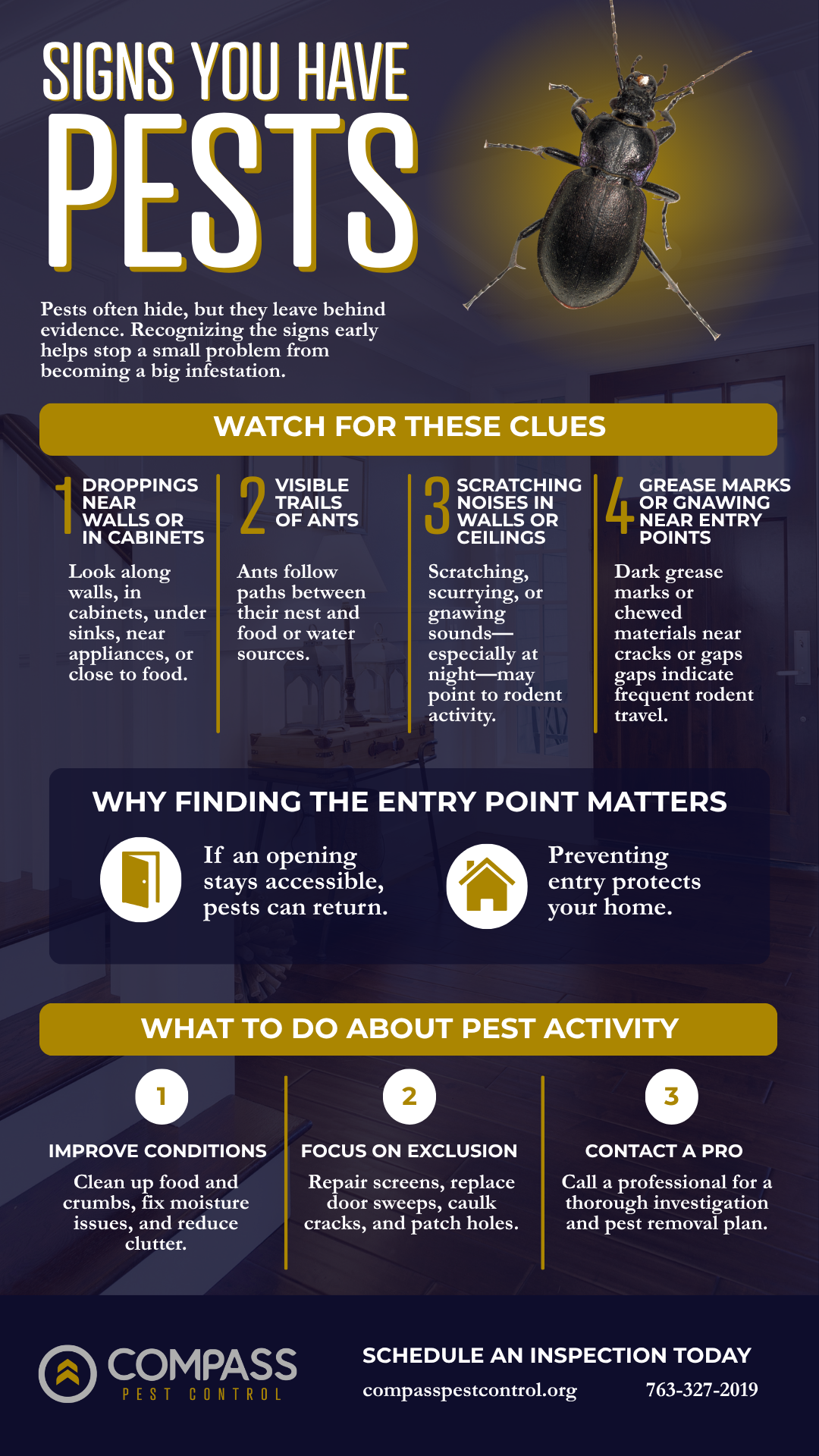
Signs You Have a Pest Problem
Pests leave subtle evidence of where they are traveling, feeding, or nesting. Watch for common warning signs.
Droppings Near Walls or in Cabinets
Droppings are one of the clearest signs you have pests. Rodent droppings are commonly found along walls, inside cabinets, under sinks, near appliances, or close to food sources. Check room edges and walls, as rodents often travel along these paths.
If you repeatedly find droppings in the same location, don't simply clean them up and move on. Look for nearby cracks, gaps, or other potential entry points to determine how pests are getting into your house.
Visible Trails of Ants
A few ants in your kitchen may seem insignificant, but a consistent line of ants is worth investigating. Ants follow established trails between their nest and food or water sources. You may notice them traveling along countertops, walls, windows, or door frames.
Pay attention to where the trail begins or disappears to help answer the question: where do bugs enter your house? Small gaps around windows, doors, utility lines, and other openings provide convenient access.
Scratching Noises in the Walls or Ceilings
Not all pest activity is visible. Scratching, scurrying, or gnawing sounds coming from walls, ceilings, attics, or other enclosed areas may indicate rodents moving through your home.
These noises will be particularly noticeable at night when the house is quiet and rodents are active. If you regularly hear movement but cannot identify the source, don't assume it will go away on its own. The activity may indicate that pests have already found an entry point and established a route inside the structure.
Grease Marks or Gnawing Near Entry Points
Grease marks and gnawing near a crack, hole, or gap can provide a particularly useful clue about how pests get into your house. Rodents frequently travel along walls and through the same pathways. Over time, the oils and dirt from their fur can leave dark or greasy marks along walls, baseboards, or other surfaces.
Additionally, look for chewed packaging, wood, insulation, wiring, or other materials, particularly around potential entry points. Rodents chew materials to gain access or maintain the openings they use to navigate through a structure.
Why Finding the Entry Point Matters
Identifying the pest is important, but identifying how it got inside is just as valuable. If an opening remains accessible, treating the current pest problem without addressing the entry point may leave your home vulnerable to another infestation.
One of the most effective pest control tips is to inspect the exterior of your home regularly and seal entry points for pests before they become a problem.
What to Do When You Notice Signs You Have Pests
Once you notice the signs you have pests, take a closer look at the conditions around your home. Keep food stored in sealed containers, clean up crumbs and spills, address moisture problems, reduce clutter, and inspect areas where pests could enter.
Then focus on exclusion. Repair damaged screens, replace worn door sweeps, caulk cracks and crevices, and seal entry points for pests around utility lines, windows, doors, and the foundation.
If you continue finding droppings, seeing ant trails, hearing scratching, or noticing grease marks and gnawing, it's time to investigate further.
When to Call a Professional
Not every insect or pest sighting means you have an infestation. However, recurring activity or multiple warning signs can indicate that pests are gaining regular access to your home.
At Compass Pest Control, we provide customized pest management services for Minnesota homes and businesses, focusing on long-term solutions, proactive prevention, and professional pest control tips. As a family-owned company, we combine hands-on industry experience with an integrated pest management approach designed to address the underlying causes of pest problems.
The sooner you recognize the signs you have pests, the sooner you can take action. Knowing where bugs enter a house, identifying evidence of activity, and taking steps to seal entry points for pests all help protect your home. If the signs continue, schedule an inspection with Compass, and we’ll help determine exactly what you're dealing with.