
How to Reduce Spider Activity Around Your Home
Seeing a spider occasionally in your home is normal, especially in Minnesota. Common house spiders are beneficial predators that help control insect populations, but a steady stream of webs or spiders indoors can be frustrating, not to mention scary if you have kids or arachnophobia.
If you’re wondering how to get rid of spiders, understanding what attracts them and addressing the conditions that support them are the keys to effective spider prevention.
How Do Spiders Get Into Your Home?
Common house spiders typically enter homes through small openings around doors, windows, foundations, and other exterior entry points. Some species wander indoors accidentally, while others are drawn to warm areas where they can find food and shelter. Web-building spiders tend to settle in quiet, undisturbed spaces where insects are plentiful, like cabins that sit empty in the off-season. They may be especially noticeable in basements, garages, crawl spaces, corners, windows, and other areas that receive little disturbance.
Outdoor conditions also contribute to indoor spider activity. Overgrown vegetation, yard debris, firewood, and dense landscaping near the foundation provide shelter for spiders and the insects they feed on. Exterior lighting attracts insects at night, which creates a reliable food source for common house spiders.
Spider Prevention Starts Outside
If you're wondering how to get rid of spiders, start by making your property less attractive to them. A few practical steps make all the difference when it comes to spider prevention.
Seal Entry Points
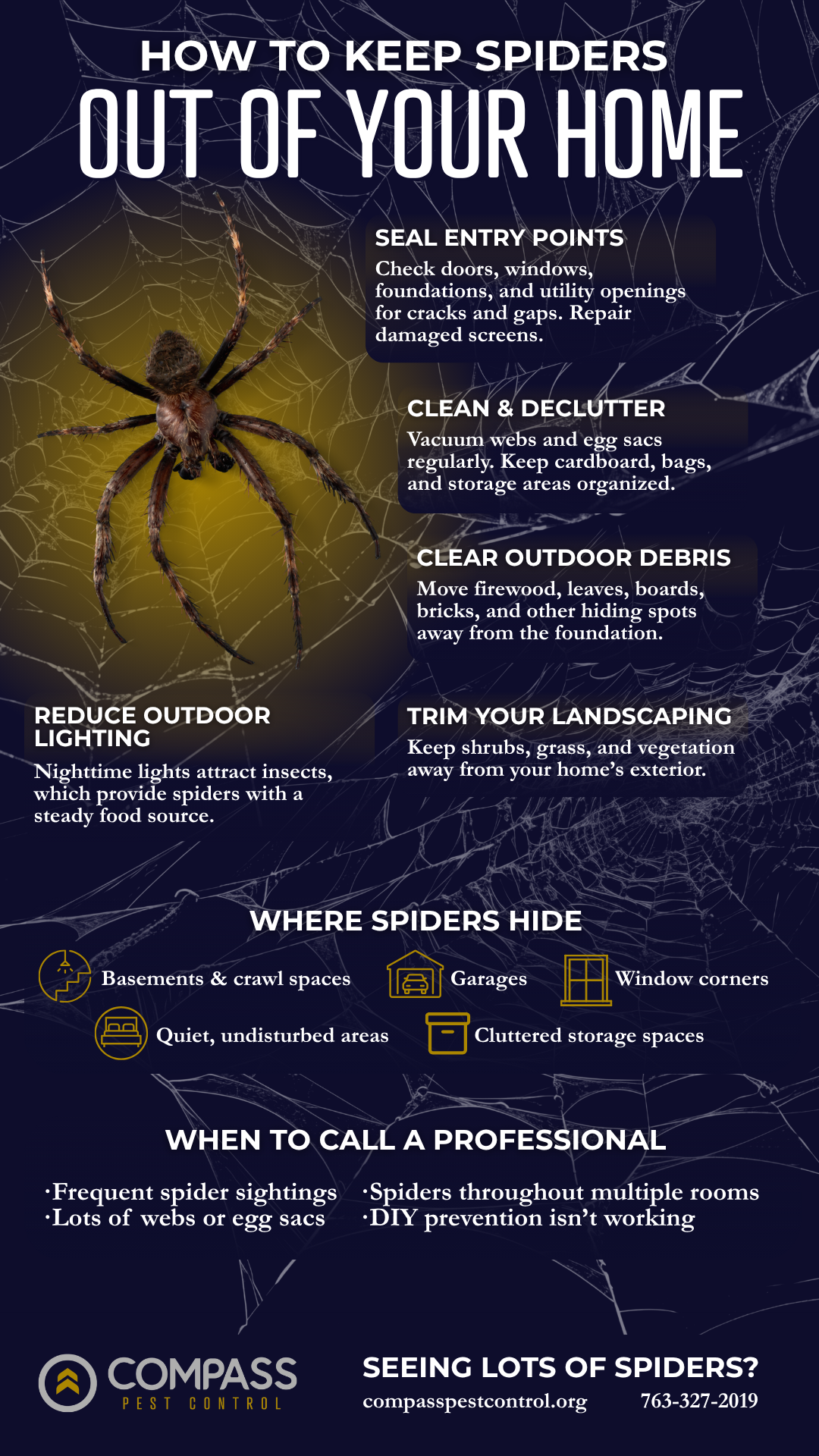
Inspect doors, windows, the foundation, and utility openings for cracks or gaps. Caulking appropriate openings prevents spiders from wandering inside.
Trim Landscaping
Keep shrubs, grass, and other vegetation out of direct contact with your home's exterior.
Move Debris Away From the Foundation
Store firewood away from the house and remove piles of leaves, boards, bricks, and other materials that provide shelter.
Reduce Outdoor Lighting
Exterior lights attract insects, which in turn provide food for common house spiders. Consider reducing unnecessary nighttime lighting.
Maintain Screens
Repair damaged window and door screens so spiders and other insects have fewer opportunities to enter.
These steps are an important part of long-term spider prevention, but they may not eliminate spider activity completely.
Keep Webs and Clutter Under Control
Regular cleaning is another simple way to get rid of spiders. Vacuum webs from corners, ceilings, and windows, paying particular attention to basements, garages, and crawl spaces. Removing webs and egg sacs helps prevent common house spiders from establishing themselves in the same areas.
Decluttering helps, too. Cardboard boxes, paper, bags, and the like create sheltered spaces for spiders to hide. Keep storage areas organized and vacuum along walls, behind furniture, and in less frequently disturbed areas.
It's also worth looking at the insects you're finding around the webs. Spiders depend on insects for food, so recurring spider activity can sometimes point to another pest issue that needs to be addressed.
When Should You Call a Professional?
A few spiders don't necessarily mean you have an infestation. However, frequent sightings, large numbers of webs, or spiders appearing throughout multiple areas of the home may indicate that conditions are allowing them to thrive.
Professional spider pest control is particularly helpful when DIY cleaning and exclusion efforts aren't solving the problem. Instead of simply removing the spiders you see, a pest professional evaluates the property, identifies contributing conditions, and develops a treatment approach based on the specific pest activity.
The Benefits of Professional Spider Pest Control
Professional spider pest control addresses more than the visible webs. Treatment reduces spiders around the home's exterior while also targeting conditions that encourage them to remain near the property. For homeowners dealing with recurring seasonal pest activity, professional service provides a more consistent approach than repeatedly addressing individual spiders.
Compass Pest Control is a locally based, family-owned company in Big Lake that understands the pest challenges Minnesota homeowners face throughout the changing seasons. We offer customized pest management designed to address current pest problems while preventing future activity.
If you're tired of finding spiders in your basement, garage, or living spaces, don't spend the season wondering how to reduce spiders in your home. Contact Compass Pest Control for professional spider prevention and a customized approach to keeping unwanted pests outside where they belong.
